How to Remove Tire Marks from Driveway: A Jacksonville Homeowner’s Guide

Those stubborn black streaks on your concrete aren’t just surface dirt; they are actually a chemical bond fused to your driveway. It’s incredibly frustrating to pull into your Jacksonville home and see ugly tire scuffs ruining your curb appeal, especially when you’re searching for how to remove tire marks from driveway surfaces without etching or damaging the concrete. You want your property to look its best, but the fear of making a permanent mistake with a pressure washer often leads to more stress than the marks themselves.
We’re here to help you navigate the confusion between simple rubber transfers and deep plasticizer migration. In this guide, you’ll discover professional-grade secrets and safe DIY methods that prioritize the health of your property. We’ll walk you through the precise chemistry needed to break those bonds and the specialized techniques used by local experts to restore curb appeal without the risk. From choosing the right degreasers to mastering the art of the hot water rinse, you’re about to learn how to keep your driveway looking pristine and professional.
Key Takeaways
- Understand how the intense Jacksonville heat causes “hot tire pickup,” bonding rubber polymers directly into your driveway’s pores.
- Identify the difference between physical rubber transfers and chemical plasticizer migration to ensure you use the correct removal method.
- Master the professional secret of “dwell time” when learning how to remove tire marks from driveway surfaces using safe, alkaline degreasers.
- Protect your concrete from permanent damage by avoiding wire brushes and the common “zebra stripe” traps caused by improper pressure washer use.
- Learn when to utilize professional hot water cleaning to safely melt away stubborn stains that standard garden hoses and DIY tools cannot reach.
Why Your Driveway Has Tire Marks: The Friction and Florida Heat Factor
Driveways in Jacksonville take a beating from both heavy vehicles and the relentless Florida sun. When you pull into your garage after a long commute, your tires are often holding onto intense heat generated by friction. This leads to a phenomenon known as “hot tire pickup,” where the heated rubber polymers essentially melt and bond with the concrete surface. If you are struggling with how to remove tire marks from driveway surfaces, you aren’t alone. Understanding the basic mechanics of how tire marks form helps explain why these stains are so difficult to shift with a standard garden hose. High-performance tires are often the biggest culprits. Their softer rubber compounds provide better grip on the road but leave behind significantly more residue when they come to a rest on your driveway.
The Role of Humidity and Surface Temperature
Jacksonville’s climate plays a massive role in the longevity of these stains. On a typical 90-degree day, your concrete surface can easily reach temperatures exceeding 140 degrees. This heat keeps the tire polymers in a semi-liquid state for longer, allowing them to seep deeper into the porous substrate. Thermal expansion in residential driveways refers to the slight increase in volume and surface area of concrete as it absorbs solar radiation and heat. This expansion opens up the microscopic “pores” of the concrete, acting like a sponge for heated rubber. If you are looking at how to remove tire marks from driveway, you’ll find that marks made in the cool morning are much easier to treat than those baked in by the afternoon sun. By the time the evening humidity rolls in, those marks have often fused into a stubborn, chemical-resistant layer.
New Concrete vs. Aged Concrete
The age of your driveway determines how you should approach cleaning. New or “green” concrete is particularly vulnerable because it hasn’t fully reached its maximum density or chemical stability. Attempting a deep clean on a surface that hasn’t cured for at least 28 days can lead to permanent etching or aggregate exposure. You might think the marks are just on the surface, but on fresh concrete, they can penetrate deep into the still-forming matrix. As your driveway ages, it becomes more brittle and porous, making it even more susceptible to deep chemical staining from tires. Following professional concrete cleaning Jacksonville FL standards ensures that the cleaning pressure and chemical balance are adjusted for the specific maturity of your concrete. This precision prevents the surface damage that often occurs with aggressive DIY attempts that don’t account for the concrete’s age.
Rubber Transfer vs. Plasticizer Migration: What Kind of Stain Is It?
Before you grab a scrub brush, you need to know exactly what you’re fighting. Most homeowners assume all black streaks are just rubber sitting on the surface, but that is rarely the case. There are two distinct types of marks that plague Jacksonville driveways: rubber transfer and plasticizer migration. Identifying which one you have is the first step in learning how to remove tire marks from driveway concrete without wasting your Saturday on ineffective methods.
Rubber transfer is exactly what it sounds like. It’s a physical scuff where tire material has literally rubbed off onto the concrete. Think of it like a pencil mark on paper. Plasticizer migration is much more insidious. Tires contain oils and chemicals called plasticizers that keep the rubber flexible. When hot tires sit on a sealed driveway, these chemicals leach out and bond with the sealer itself. This creates a chemical stain that is actually inside the finish, rather than on top of it.
Perform a simple “touch test” to diagnose the issue. Run your hand over the mark. If you feel a slight texture or a raised edge, you’re dealing with rubber transfer. If the surface feels perfectly smooth but the stain remains visible, you’ve got plasticizer migration. This chemical leaching is the primary reason many driveway marks seem permanent, as standard soaps cannot break that molecular bond.
Identifying Rubber Scuffs
Rubber scuffs often appear as dark, textured streaks with a clear “start” and “stop” point. They usually happen when you turn your steering wheel while the car is stationary or brake suddenly. Because these marks sit on the surface, they respond well to mechanical agitation. A stiff brush and a quality alkaline degreaser can often lift the bulk of the material. If the scuffs are fresh, you might even see small flakes of rubber pull away as you scrub.
The Science of Plasticizer Leaching
Plasticizer leaching creates a “shadow” effect that perfectly mimics your tire’s tread pattern. It doesn’t look like a scuff; it looks like a dark photograph of the tire printed onto your driveway. These stains occur because the chemicals in the tire and the chemicals in your driveway sealer are attracted to each other. They migrate across the contact point and fuse together. Removing these requires more than just elbow grease. If your DIY efforts aren’t making a dent in these shadows, it might be time to look into professional driveway cleaning to restore the surface safely.
Step-by-Step: DIY Methods for Removing Driveway Tire Scuffs
If you’re tackling how to remove tire marks from driveway surfaces yourself, start with the right arsenal. You don’t need expensive machinery for basic rubber transfer, but you do need the correct chemistry. Gather a stiff nylon-bristled brush, a concentrated alkaline degreaser, and a standard garden hose. Avoid wire brushes at all costs; they can strip the finish off your concrete and leave behind metal fragments that eventually rust, creating a much larger problem than a few black streaks.
Success depends on the “dwell time” secret. Most homeowners spray a cleaner and immediately start scrubbing, which is the most common mistake we see in Jacksonville. You must allow the degreaser to sit on the stain for at least 10 to 15 minutes without letting it dry out. This period allows the chemicals to penetrate the rubber polymers and break their bond with the concrete. Always test a small, inconspicuous area first to ensure the cleaner doesn’t discolor your sealer. Stay away from “garage hacks” like using gasoline or brake cleaner. These substances are dangerous, environmentally harmful, and can permanently soften your driveway’s protective coating.
The Degreasing Phase
Choose an alkaline-based cleaner specifically designed for organic oils and rubber. Apply the solution directly to dry concrete. Applying chemicals to wet concrete dilutes the formula before it can reach the pores where the rubber is trapped. Once the dwell time is up, use a circular scrubbing motion with your nylon brush. This multi-directional agitation helps lift the scuffs out of the microscopic valleys in the concrete surface. If the Jacksonville sun is particularly intense, work in small sections to prevent the cleaner from evaporating too quickly.
Rinsing and Evaluation
Rinse the area thoroughly using high-volume, low-pressure water from your garden hose. You want to flush the emulsified rubber and soap away completely rather than blasting it deeper into the substrate. After the surface dries, evaluate the results. You might notice a faint “ghost mark” left behind. This is often just a sign that a second pass is needed. However, if the mark remains unchanged after two attempts, stop scrubbing. Excessive mechanical force can lead to etching, which is a permanent change in the concrete’s texture that no cleaning solution can fix. At this stage, the stain has likely transitioned from a surface scuff to deeper chemical migration.

The DIY Danger Zone: How to Avoid Etching and Ruining Your Concrete
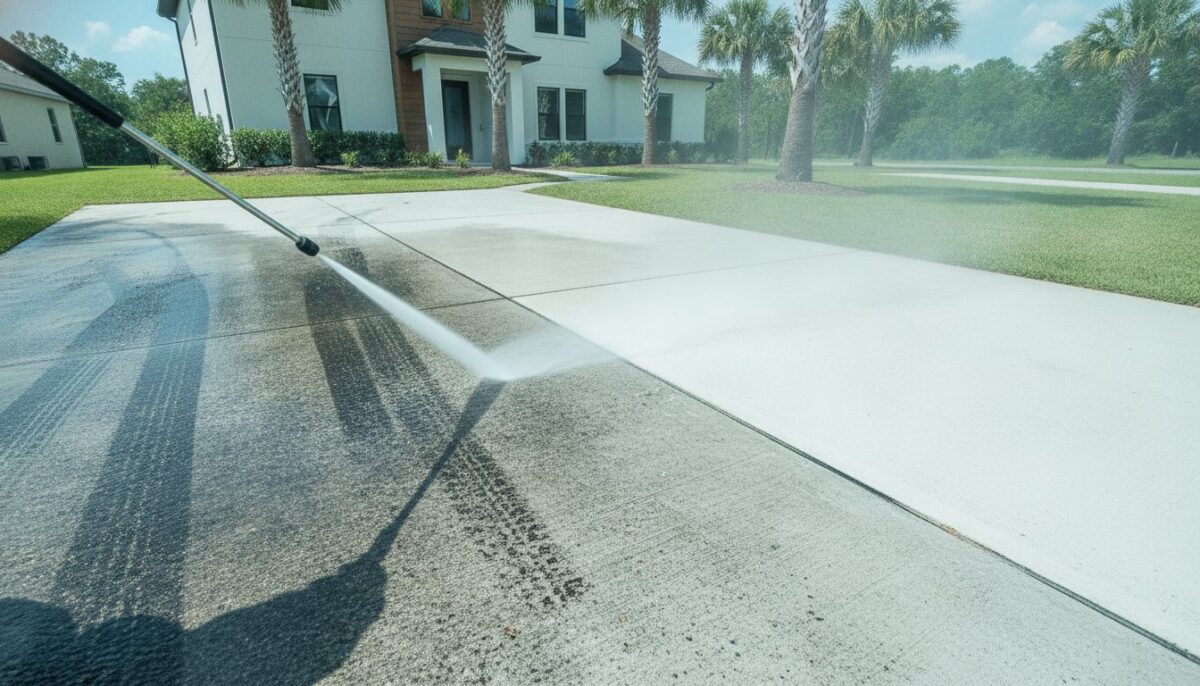
Cleaning your driveway feels like a straightforward Saturday project until you see the permanent stripes left behind by a high-pressure wand. When homeowners research how to remove tire marks from driveway surfaces, they often fall into the “Zebra Stripe” trap. This happens when a narrow, high-pressure nozzle is held too close to the concrete, carving lines into the surface. These aren’t just clean spots; they are physical gouges where the pressure has actually removed the top layer of material. Once these lines are etched into your driveway, no amount of washing or scrubbing will ever fix them. You’re left with a permanent reminder of a DIY attempt gone wrong.
Understanding Concrete Etching
Concrete has a delicate top layer known as the “cream.” This smooth finish provides the uniform, polished look of a high-quality driveway. High-pressure wands from consumer-grade machines can easily blast this layer away, exposing the rough aggregate underneath. This damage is irreversible and makes the surface even more porous, which means it will soak up future oil and tire stains even faster. We advocate for safer methods that prioritize the health of the surface, much like the principles used in soft wash house washing Jacksonville. Protecting the integrity of the substrate is always more important than removing a temporary scuff.
Safe Agitation Techniques
Stick to nylon bristles for any manual scrubbing. Wire brushes are the enemy of a smooth driveway finish. They don’t just scratch the surface; they also leave behind microscopic metal fragments embedded in the concrete pores. In our humid Jacksonville air, those fragments will rust within days, replacing your black tire marks with stubborn orange streaks. You also need to be mindful of your chemical choices. Using the wrong pH cleaner can cause chemical burns on the concrete, leading to a chalky residue or permanent discoloration. Highly acidic cleaners might react with the lime in the cement, weakening the structure of your driveway over time.
Environmental responsibility is another critical factor. According to Jacksonville’s Stormwater Management Utility Code, Chapter 754, discharging chemicals into the storm sewer is considered an illicit discharge. You must manage your runoff to keep our local waterways safe. Always direct your rinse water toward your lawn or a landscaped area where the soil can naturally filter the soapy residue. If you’re unsure about the right pressure settings or chemical balance for your property, let’s talk about how professional concrete cleaning can protect your investment and restore your curb appeal safely.
Professional Driveway Restoration: When Scuffs Require Expert Intervention
Sometimes, despite your best Saturday morning efforts, those dark shadows refuse to budge. This is usually when you’ve moved past simple rubber scuffs into the territory of deep chemical migration. Understanding how to remove tire marks from driveway surfaces at this level requires more than just a scrub brush and elbow grease. It requires professional-grade thermal energy. We utilize specialized hot water equipment that reaches 200 degrees to effectively melt the tire polymers that have fused with your concrete. Cold water simply can’t break those chemical bonds; our high-temperature systems emulsify the residue so it can be safely extracted without damaging the underlying substrate.
To achieve a truly uniform, streak-free finish, we use commercial surface cleaners rather than standard pressure wands. These rotary tools provide consistent pressure across every square inch of your driveway. This eliminates the risk of the “zebra stripes” we discussed earlier, ensuring your property looks pristine from the street to the garage door. As a locally owned Jacksonville partner, we take immense pride in delivering these high-end results to our neighbors in Orange Park and Fleming Island. We don’t just wash away dirt; we restore the original character of your property.
Professional Grade Surfactants and Degreasers
Industrial-strength chemistry is the second half of the professional equation. While household dish soaps are great for surface tension, they lack the molecular weight to pull plasticizers out of a sealed surface. We use specialized surfactants and degreasers that are specifically formulated for the porous nature of Florida concrete. Our high-flow equipment ensures these chemicals are pushed deep into the pores and then thoroughly flushed out. This level of deep cleaning is a transformative step for homeowners looking to maximize their curb appeal. A bright, clean driveway sets the tone for the entire property and makes an immediate impression on visitors and neighbors alike.
Long-Term Prevention and Maintenance
Once we’ve restored the surface, the focus shifts to keeping it that way. Professional-grade penetrating sealers are the only real defense against future plasticizer migration. These sealers create a microscopic barrier that blocks tire oils from being absorbed by the concrete matrix. This makes future maintenance as simple as a quick rinse with a garden hose. If you’re preparing your property for the market, understanding the pressure washing before selling home ROI can help you see the long-term value of this investment. Don’t let stubborn stains diminish your property’s value or your own peace of mind. Get a free estimate from Ehrman’s Power Wash today and let our experts handle the heavy lifting for you.
Take Back Your Curb Appeal Today
Understanding how to remove tire marks from driveway surfaces is the first step toward reclaiming your home’s professional appearance. You now know that while simple scuffs might yield to a bit of elbow grease and the right degreaser, those deep chemical shadows often require a more sophisticated touch. Protecting your concrete from permanent etching is vital, as the damage from improper pressure settings or wire brushes can’t be undone. By prioritizing safe agitation and the right dwell times, you ensure your property remains a source of pride rather than a weekend headache.
If those stubborn marks persist, don’t risk damaging your investment with consumer-grade equipment. As a locally owned and operated Jacksonville business, Ehrman’s Power Wash specializes in hot water cleaning that safely melts away tire polymers and oil stains. We proudly serve our neighbors in Orange Park, Fleming Island, and Fruit Cove with the precision and care your home deserves. Ready for a transformative clean? Request Your Free Driveway Cleaning Quote from Ehrman’s Power Wash and let us handle the heavy lifting for you. We look forward to helping your driveway look its absolute best.
Frequently Asked Questions
Does Dawn dish soap really remove tire marks from concrete?
Dawn dish soap is excellent for surface oils but lacks the chemical strength to break the molecular bond of tire plasticizers. While it’s a safe starting point for very light rubber scuffs, it won’t resolve deep chemical migration into your concrete. You need a professional alkaline-based degreaser to effectively treat these stubborn marks. If the soap doesn’t work after one attempt, stop scrubbing to avoid damaging the concrete’s surface finish.
Will a pressure washer get tire marks off my driveway?
Using a pressure washer is a common approach when homeowners look for how to remove tire marks from driveway concrete, but it requires extreme caution. Professionals recommend a machine with 4.0 gallons per minute at 4,000 PSI for residential surfaces. Use a wide fan tip rather than a pinpoint nozzle to avoid leaving permanent “zebra stripes” or gouging the finish. If cold water doesn’t shift the marks, high-pressure alone rarely solves the chemical bond.
How do I remove tire marks from pavers without moving the sand?
Removing marks from pavers requires a delicate balance of chemical cleaning and low-pressure rinsing. Use a targeted alkaline degreaser and a soft-bristle brush to agitate the stain without disturbing the joint sand. Rinse with a gentle fan spray rather than a direct blast to keep the sand in place. If the marks are deep, professional hot water cleaning can emulsify the rubber without needing the high pressure that typically displaces paver sand.
Can I use brake cleaner to remove tire marks?
You should never use brake cleaner or gasoline to clean your driveway. These chemicals are highly flammable and can permanently damage or soften the protective sealer on your concrete. They also pose a significant risk to your landscaping and local Jacksonville storm drains. Stick to biodegradable, alkaline-based cleaners that are designed specifically for concrete restoration and environmental safety. Professional-grade products achieve better results without the dangerous side effects of garage chemicals.
Are tire marks on a driveway permanent if not treated immediately?
Tire marks can become permanent if left untreated, especially under the intense Florida sun. The heat causes the rubber polymers and plasticizers to migrate deeper into the concrete pores over time. While most marks can be removed with professional hot water equipment, waiting too long increases the risk of the stain becoming a permanent part of the concrete’s chemical matrix. Prompt treatment is always the best approach for maintaining your home’s curb appeal.
Why do my new tires leave more marks than my old ones?
New tires contain a higher concentration of plasticizers and oils to keep the rubber flexible for safety and performance. As you drive, these chemicals are more likely to leach out when the tires are hot. High-performance tires are especially prone to leaving residue because their rubber compounds are softer for better grip. As tires age and the rubber hardens, they typically leave fewer marks on your driveway surface than a brand-new set of tires.
How much does professional driveway cleaning cost in Jacksonville?
Professional driveway cleaning costs in Jacksonville vary based on the square footage and the severity of the staining. Factors such as the length of your driveway and whether you require specialized hot water treatment for deep tire marks will influence the final price. While a single-car driveway is a smaller investment, larger double-wide properties require more time and materials. We recommend getting a tailored estimate to ensure you receive the most accurate pricing for your property.
Will sealing my driveway prevent tire marks from coming back?
Sealing your driveway is the most effective way to prevent future tire marks from becoming permanent. A high-quality penetrating sealer creates a microscopic barrier that blocks oils and plasticizers from soaking into the concrete pores. While it won’t stop the tires from leaving a surface scuff, it makes learning how to remove tire marks from driveway surfaces much easier. You’ll find that most future marks can be rinsed away with a simple garden hose.