How to Remove Rust Stains from Your Driveway: A 2026 Homeowner’s Guide

Blasting your concrete with high pressure is actually the worst way to treat a stubborn rust stain. You’ve likely spent an entire Saturday behind a rental pressure washer, only to watch those persistent orange streaks mock your hard work. It’s incredibly frustrating to see your curb appeal suffer, especially when you’re searching for how to remove rust stains from driveway surfaces without withering your lawn or etching the concrete. We understand that local homeowners want a pristine home without the risk of property damage. Many people don’t realize that rust isn’t just dirt; it’s a chemical bond that requires a specific scientific approach to break.
This guide will teach you the professional secrets to neutralizing iron oxide rather than trying to force it out with water. You’ll discover how to use safe, biodegradable treatments that protect your landscaping while restoring your concrete to its original glory. We’re going to break down why your irrigation system might be the hidden culprit and provide a clear, step by step method to ensure those unsightly brown marks stay gone for good. By the end of this article, you’ll have the confidence of a seasoned pro to handle even the deepest North Florida stains with precision and care.
Key Takeaways
- Stop using high pressure for rust; it is a chemical bond that requires neutralization rather than mechanical force to remove.
- Identify the source of orange streaks, such as Jacksonville’s iron-rich well water or golf cart battery leaks, to prevent the stains from returning.
- Discover how to remove rust stains from driveway concrete using specialized, acid-based treatments that protect your landscaping and the integrity of your surface.
- Master the essential pre-wetting technique to ensure cleaning solutions don’t soak too deeply into your porous driveway.
- Recognize when a stain requires professional-grade neutralizing agents to avoid permanent etching or surface failure on your property.
Common Causes of Driveway Rust Stains in Jacksonville
Identifying the culprit is the first step in learning how to remove rust stains from driveway surfaces. In Jacksonville, our unique geography and lifestyle create specific staining challenges that homeowners in other states rarely face. Whether it’s the salt-heavy humid air or the mineral-dense water table, your concrete is constantly under siege. Understanding the source of the orange allows you to choose the right remedy and, more importantly, prevent the problem from returning next month.
Irrigation Rust: The North Florida Scourge
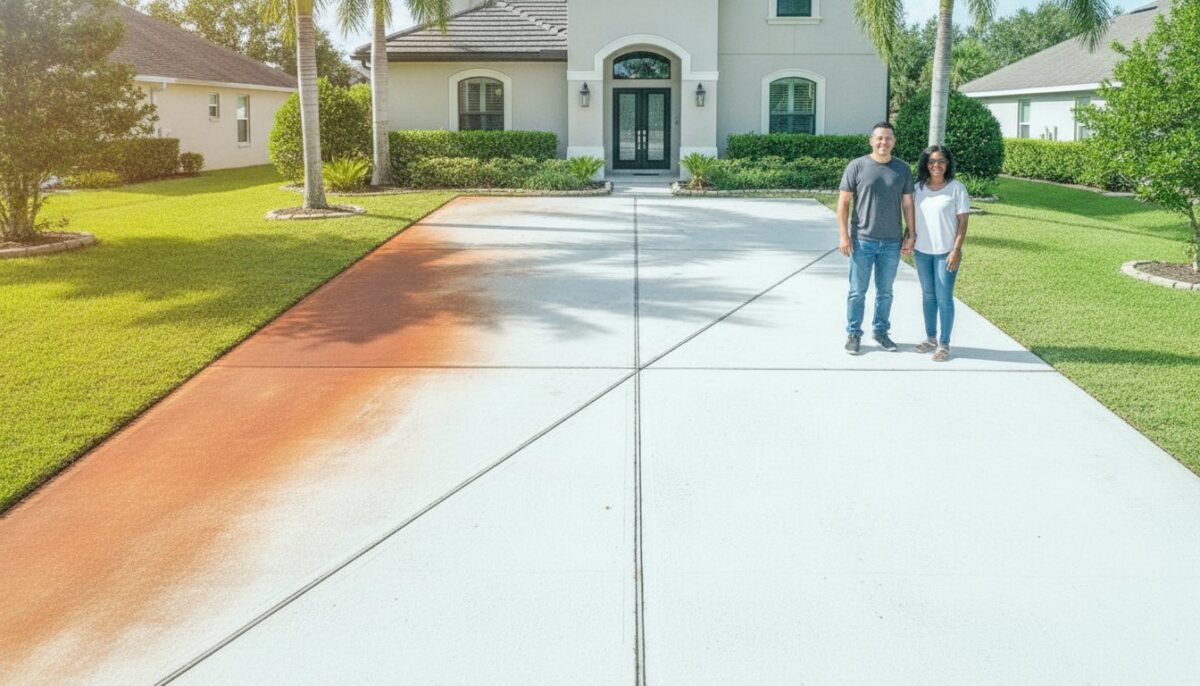
If you live in neighborhoods like Fleming Island or Fruit Cove, you’ve likely seen the “Florida Orange” tint creeping up your white concrete. This isn’t mud or simple dirt. It’s the result of iron-rich well water being sprayed through your sprinkler heads. The Science of Rust explains that when dissolved iron in the water hits the oxygen in the air, it oxidizes almost instantly. This creates a distinct “fan pattern” on your driveway where the sprinkler reaches its furthest arc. Because this water is used regularly for lawn care, the staining is layered and persistent. It requires a specialized approach because the iron actually “dyes” the porous concrete over time. This makes it much harder to clean than a simple surface spill.
Chemical vs. Metallic Rust
Not all orange marks are created equal. Metallic rust occurs when a physical object, like a forgotten garden tool or metal patio furniture, sits in our high humidity. These are usually surface-level deposits that leave a clear outline of the object. On the other hand, fertilizer overspray creates a “polka dot” effect. Many high-quality fertilizers contain iron pellets that, when left on damp concrete, melt into small, dark orange circles. These are tiny but can number in the hundreds across a standard driveway. To see how professionals manage these treatments safely, check out Performance Lawns, INC.
The most aggressive culprit is leaking battery acid from golf carts or older vehicles. This isn’t just a stain; it’s a deep-set chemical burn. Battery acid contains sulfuric compounds that change the chemistry of the concrete itself. While you might be looking for how to remove rust stains from driveway areas caused by a rusty shovel, battery acid requires professional-grade neutralizing agents. If you don’t neutralize these burns immediately, they can lead to permanent etching and structural scaling. Identifying these differences early saves you time and prevents you from using the wrong cleaning agent on a sensitive surface.
Many homeowners assume that a high-PSI stream of water is the ultimate solution for any blemish on their property. However, when you’re looking for how to remove rust stains from driveway concrete, brute force is often your worst enemy. Rust isn’t a surface-level dirt deposit. It’s a chemical reaction between iron and oxygen that effectively dyes the material. Think of your driveway as a giant, solid sponge. Because concrete is naturally porous, the oxidized iron seeps deep into the microscopic voids of the slab, far beyond the reach of a water jet.
The Danger of High-Pressure DIY
Using a rental pressure washer at maximum settings usually only strips away the surface “cream” of the concrete while leaving the deep-set stain intact. This often results in “zebra stripes” or permanent wand marks that ruin the uniform look of your home. Concrete etching is the physical removal of the cream-top layer of cement. Once you’ve etched the surface, there’s no way to “un-blast” it. You’re left with a rough, uneven texture that actually traps more dirt and minerals in the future. Professionals avoid this by prioritizing chemistry over pressure.
How Chemical Neutralization Works
Effective rust removal is a chemical process, not a mechanical one. To get professional results, you must break the bond between the iron and the concrete. Specific acids, such as oxalic or phosphoric acid, work by converting the insoluble iron oxide into a colorless, water-soluble form. This allows you to safely clean light rust without aggressive scrubbing that can damage the surface. It’s about working smarter, not harder, to preserve the integrity of your driveway.
The key to this transformation is “dwell time.” You must allow the neutralizer to sit on the surface long enough to penetrate the pores and lift the stain to the top. If you rinse too early, the chemical doesn’t finish its job. If you wait too long, it might dry and re-deposit the minerals. It’s a delicate balance that requires precision and experience. If you’re tired of fighting orange streaks that won’t budge, our expert driveway cleaning team uses these exact professional-grade methods to restore your home’s curb appeal safely.
- Neutralize the iron bond instead of trying to blast it with water.
- Protect the “cream top” layer of your concrete from permanent etching.
- Lift stains out of the pores using acid-based solutions.
- Ensure proper dwell time for a complete chemical reaction.
DIY Rust Removal Methods: Pros and Cons
Grabbing a bottle of white vinegar from the pantry is often a homeowner’s first instinct. It’s approachable and safe. However, figuring out how to remove rust stains from driveway surfaces requires matching the strength of the cleaner to the depth of the stain. While DIY methods offer a sense of control, they often lack the chemical potency needed for the mineral-heavy deposits we see in Jacksonville. Understanding the limits of these “home hacks” will save you from a long afternoon of fruitless scrubbing.
Household Remedies: Vinegar and Lemon Juice
Vinegar and lemon juice are the gentlest options available. They are budget-friendly and won’t harm your pets or family if a small spill occurs. The downside is that these weak acids only tackle surface-level oxidation. If you’re dealing with a light mark from a metal bucket, a lemon might work. If you have deep-set irrigation streaks, you’ll likely end up with sore muscles and a stain that has simply spread rather than disappeared. These remedies lack the surfactants necessary to penetrate the porous concrete we discussed earlier.
Store-Bought Rust Removers
Commercial rust removers from the hardware store provide more “bite.” These products typically use stronger acids to break the iron bond more effectively than kitchen staples. They are specifically formulated for concrete, but they come with their own set of challenges.
- Pros: Specifically formulated for porous concrete; faster results than vinegar.
- Cons: Significant risk of skin and eye irritation; can leave unsightly white “bleach” spots if applied unevenly.
- Expense: Treating a standard 600-square-foot Jacksonville driveway can become costly when buying individual consumer-grade bottles.
Protecting your property is vital during this process. Many store-bought acids are “grass killers” in disguise. Without proper pre-wetting and post-application dilution, the runoff can leave dead, brown patches along the edges of your driveway. We also have to be mindful of local regulations. Chapter 754 of the Jacksonville Stormwater Management Utility Code prohibits discharging chemicals into the storm sewer system. To comply, you must direct your runoff into the grass or landscaping. This creates a difficult balancing act: you must protect the river while simultaneously ensuring your cleaning solution doesn’t destroy your lawn.
Knowing when to put down the scrub brush is the hallmark of a savvy homeowner. Large-scale irrigation rust or battery acid burns often prove too much for consumer products. If you find yourself applying the same bottle for the third time with no progress, you’re likely wasting money and risking surface damage. Professional grade solutions are often necessary to achieve a uniform, stain-free finish without the “zebra stripes” common in DIY attempts.

Step-by-Step: How to Safely Clean Light Rust Yourself
If you’ve identified a minor tool mark or a small fertilizer spot, you can likely handle it yourself. Learning how to remove rust stains from driveway concrete is a methodical process that rewards patience and safety. Don’t rush the setup. When you know how to remove rust stains from driveway surfaces correctly, you save yourself from the permanent etching caused by improper techniques. This approach prioritizes the health of your concrete and your surrounding Jacksonville landscaping.
Preparation and Safety First
Safety isn’t just a suggestion; it’s a requirement when handling acids. Wear heavy-duty rubber gloves, safety goggles, and closed-toe shoes to protect yourself from splashes. Before you even touch the cleaner, clear the area completely. Sweep the driveway thoroughly to remove dirt, sand, and leaves that might block the chemical from reaching the concrete pores. Next, soak the surrounding grass and plants with fresh water from a garden hose. This creates a protective barrier, ensuring any accidental runoff is diluted before it can harm your lawn.
The Application Process
Work in manageable sections, roughly 5×5 feet at a time. This prevents the solution from drying before you can rinse it. Use a low-pressure pump sprayer to apply your chosen rust remover evenly across the affected area. Once applied, use a stiff-bristled nylon brush to work the solution into the stain with firm, circular motions. This mechanical action helps the chemical penetrate deeper into the porous surface where the iron oxide lives.
Watch the clock closely. Most products require a “dwell time” of 5 to 10 minutes to react with the iron. You must keep the solution wet the entire time. If it starts to dry, it can leave permanent white spots or re-deposit the rust minerals back into the slab. This is the “sweet spot” where the chemistry does the heavy lifting for you.
After the dwell time, rinse the area thoroughly with plenty of water. Direct the runoff toward your pre-wetted lawn to help neutralize the acid. Remember to follow local Jacksonville regulations by keeping chemical runoff out of the street gutters and storm drains. For more comprehensive advice on maintaining your exterior surfaces, see our Concrete Cleaning Jacksonville FL guide for deeper cleaning tips.
If the stain persists after two attempts, or if you’re worried about damaging high-end pavers, it’s time to stop. Our professional driveway cleaning service uses specialized equipment and industrial-grade neutralizers to handle the tough jobs safely and effectively.
When to Call a Jacksonville Professional for Rust Removal
While the previous section covered the basics of how to remove rust stains from driveway surfaces for minor spots, there are times when a bucket and brush simply won’t cut it. Large-scale staining requires a different level of precision. If your entire driveway has turned a uniform shade of orange from a faulty irrigation system, the sheer volume of chemicals and time needed for a DIY fix becomes overwhelming. Professional intervention ensures the job is done efficiently without risking the integrity of your concrete or the health of your lawn.
Deep battery acid burns are another scenario where you should put down the scrub brush. These stains aren’t just on the surface; they’re chemical burns that have altered the concrete’s composition. Attempting to clean these with standard hardware store products often results in further etching. Professionals use industrial-grade neutralizing agents that stop the chemical reaction and prevent the concrete from scaling or crumbling. This specialized knowledge is the only way to save the slab from permanent structural damage.
Professional-Grade Solutions
Professional cleaners have access to highly concentrated neutralizing agents that aren’t available at big-box stores. These chemicals are designed to penetrate deeper into the porous concrete to lift iron oxide from the bottom up. Beyond just the chemicals, the equipment makes a massive difference. A professional surface cleaner provides 10x the efficiency of a standard pressure washing wand. It uses rotating jets to deliver a uniform, streak-free finish that eliminates the “zebra stripes” often left behind by rental units.
Investing in a professional service offers a superior ROI for homeowners in communities like Orange Park and Fleming Island. Curb appeal is a major factor in property value. A blotchy, etched driveway can actually detract from your home’s worth. By choosing a specialist, you avoid the high cost of repairing etched concrete or replacing dead landscaping. We bring the right tools to handle the North Florida water table issues that cause these persistent stains in the first place. It’s a calculated choice that protects your most valuable asset.
The Ehrman’s Power Wash Advantage
At Ehrman’s Power Wash, we position ourselves as your Reliable Local Expert. We understand the specific challenges of Jacksonville properties, from the high humidity to the mineral-dense well water. Our team treats your home with the same care we would give our own neighbors. We don’t just blast away the surface; we use a meticulous, chemical-first approach to ensure the rust is neutralized at the source. This attention to detail prevents the return of orange streaks and preserves the “cream top” layer of your driveway.
Don’t risk your driveway’s finish with harsh, unverified DIY methods that might lead to permanent damage. Our process is safe, effective, and tailored to the unique needs of North Florida concrete. We take pride in renewing your home’s exterior with a level of precision that only a seasoned pro can provide. Contact Ehrman’s Power Wash for a free estimate today and let us restore your curb appeal with our expert driveway cleaning services.
Restore Your Curb Appeal with Confidence
Reclaiming your home’s appearance doesn’t require aggressive blasting that damages your concrete. You now understand that how to remove rust stains from driveway surfaces is a matter of chemistry, not force. By prioritizing neutralization over pressure and protecting your Jacksonville landscaping through proper pre-wetting, you can manage light stains safely. Remember that persistent irrigation marks or deep battery acid burns require specialized industrial-grade solutions to avoid permanent etching or scaling.
As a locally owned and operated business in JAX, we take immense pride in helping our neighbors maintain beautiful, value-rich properties. We use specialized rust neutralization techniques that consumer-grade rental units simply cannot match. With over 100+ 5-star reviews from your neighbors, our team at Ehrman’s Power Wash is ready to handle the heavy lifting for you. Get Your Free Driveway Cleaning Estimate in Jacksonville today. We look forward to showing you the transformative power of a professional clean and helping your home shine once again.
Frequently Asked Questions
Will pressure washing remove rust from my driveway?
High-pressure water alone cannot remove rust because the stain is a chemical bond, not a layer of surface dirt. Blasting the area often leads to permanent etching or zebra stripes on your concrete. Since rust penetrates the pores like a dye, you need a chemical neutralizer to lift the iron oxide. We recommend a low-pressure application of professional-grade cleaners to protect the integrity of your slab while achieving a clean finish.
Is it safe to use muriatic acid on my concrete driveway?
We strongly advise against DIY muriatic acid use. It is an extremely aggressive chemical that can eat through the cream layer of your concrete almost instantly, leaving a rough and pitted texture. Instead, industry professionals prefer oxalic or phosphoric acids. These are much safer for the surface and specifically target the iron bond without the high risk of permanent structural damage or dangerous fumes associated with harsher industrial acids.
How do I prevent sprinkler rust from coming back?
Prevention starts with adjusting your irrigation heads to ensure they don’t spray directly onto the concrete. In Jacksonville, our well water is often high in iron, which oxidizes upon contact with the air. You might also consider installing an inline rust inhibitor system or a water softener. Regularly checking your sprinkler patterns helps ensure that the orange tint doesn’t return to ruin your curb appeal after a professional cleaning.
Can I use bleach to remove rust stains?
Bleach is ineffective for rust removal and can actually make the problem worse. Because bleach is an oxidizer, it can accelerate the rusting process or permanently set the stain into the concrete’s pores. It is excellent for killing mold and mildew, but it has no chemical ability to neutralize iron oxide. For those looking for how to remove rust stains from driveway surfaces, it’s best to stick to dedicated acid-based rust removers.
Will rust removal chemicals kill my grass?
Many rust removal acids are harmful to vegetation if applied directly, but you can protect your lawn with proper technique. We always pre-saturate surrounding grass and plants with fresh water to create a protective barrier. After the treatment, we rinse the area thoroughly to dilute any remaining chemicals. This ensures the runoff is safe for your landscaping while still being powerful enough to eliminate the stubborn orange streaks on your driveway.
How much does professional rust removal cost in Jacksonville?
Costs vary based on the severity of the staining and the total square footage of the area being treated. For example, a few isolated spots from a metal tool will be less expensive than a driveway entirely covered in irrigation rust. We provide customized estimates for our neighbors in Orange Park and Fleming Island to ensure you get a fair price for your specific needs. Contacting a local expert is the best way to get an accurate quote.
What is the best chemical for removing driveway rust?
Oxalic acid is widely considered the most effective and safest chemical for removing driveway rust. It works through a process called chelation, which binds to the iron and makes it water-soluble so it can be rinsed away. While phosphoric acid is also used for lighter stains, oxalic acid provides the deep-cleaning power needed for porous concrete without being as destructive as other acids. It is the professional’s choice for a bright, clean result.
How long does professional rust removal take?
A standard professional treatment for a two-car driveway in Jacksonville usually takes between two and four hours. This timeframe includes the essential preparation, chemical application, and the critical dwell time required for the reaction to occur. More extensive irrigation staining or deep battery acid burns might require additional time or multiple applications. We focus on being efficient so you can get back to enjoying your clean, stain-free property as quickly as possible.